Introduction
In December 1938, a scientific event forever changed our understanding of matter: nuclear fission.
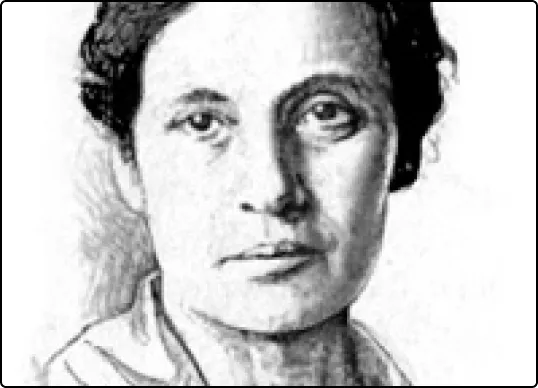
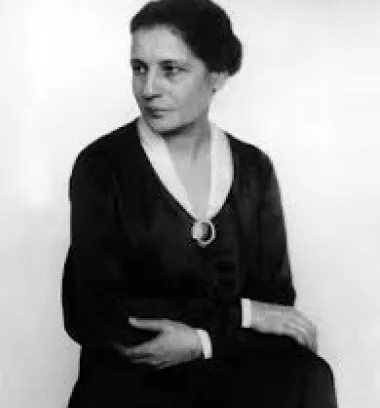
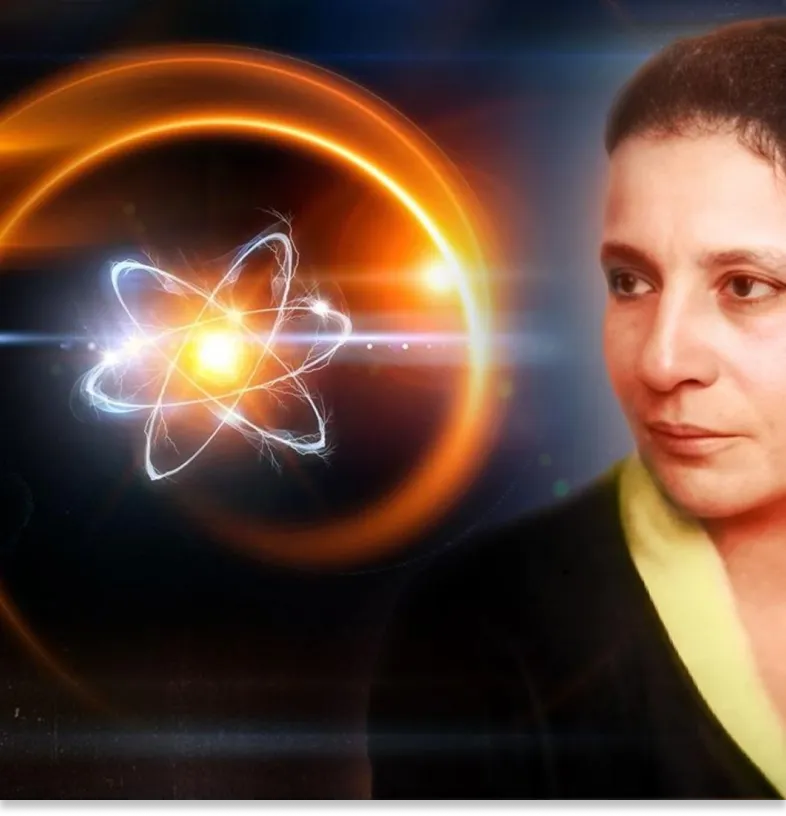
Behind this major discovery lies Lise Meitner, an Austrian physicist who had taken refuge in Sweden, and who managed to explain how an atomic nucleus could literally split in two.
Her interpretation, based on the experiments of her colleague Otto Hahn, marked the starting point of the nuclear era.
This theory goes far beyond a scientific breakthrough: it opens the door to colossal applications, from energy production to atomic weapons.
But how did Meitner manage to understand this invisible and revolutionary phenomenon?
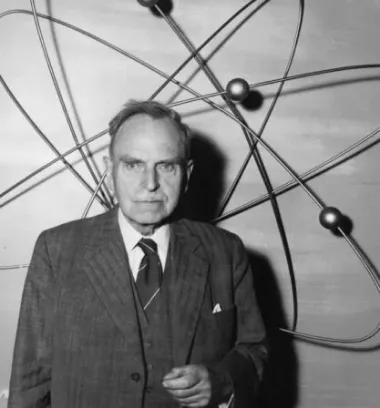
A scientist facing an atomic mystery
At the end of the 1930s, nuclear physics was in a state of great excitement.
Since the discovery of the neutron by James Chadwick, researchers had been asking: what happens when one bombards a uranium nucleus with neutrons?
Lise Meitner and the chemist Otto Hahn sought to create elements heavier than uranium — transuranic elements.
But the results obtained by Hahn and his colleague Fritz Strassmann defied all logic: instead of producing heavier atoms, they found traces of lighter elements, such as barium.
How could such a heavy nucleus turn into elements half its size?
It was up to Lise Meitner to solve this mystery.
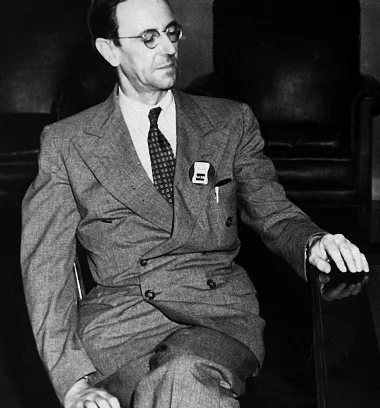
The birth of a revolutionary idea
Exiled in Sweden after the Anschluss, Lise Meitner received Hahn’s results by mail.
By analyzing them, she realized that chemical laws were no longer sufficient: the explanation had to be sought in nuclear physics.
During a walk in the snow with her nephew Otto Frisch, she found the key:
the uranium nucleus, bombarded by a neutron, deforms, breaks apart and releases an immense amount of energy.
She named this phenomenon nuclear fission, by analogy with cell division.
It was a major theoretical discovery, both simple and mind-blowing.
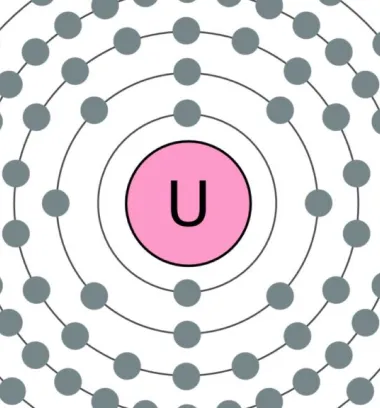
Popularization of the theory
How nuclear fission works
To understand this idea, imagine an atomic nucleus as a drop of liquid composed of protons and neutrons, bound together by a very powerful force.
1. The impact of a neutron
When a neutron hits the nucleus, it destabilizes it, like a drop of liquid vibrating after a shock.
2. The splitting of the nucleus
Under stress, the nucleus splits into two smaller fragments (for example barium and krypton), releasing several neutrons.
3. The release of energy
Part of the initial mass disappears. According to Einstein’s equation (E = mc²), this mass is converted into energy.
The result: a gigantic amount of energy is released — the fission of one gram of uranium is equivalent to burning one ton of coal.
4. The chain reaction
The neutrons released can strike other nuclei, triggering new fissions.
If this reaction spreads uncontrollably, it becomes explosive (atomic bomb).
If it is regulated, it provides a continuous source of energy (nuclear power plants).
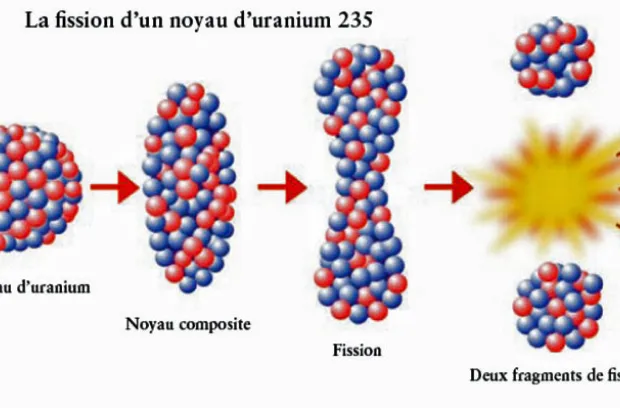
A major scientific breakthrough
Lise Meitner did not merely observe the phenomenon:
she explained and quantified it using theoretical physics.
By linking Hahn’s experimental results with Einstein’s laws, she demonstrated that the loss of mass in the nucleus corresponded exactly to the energy released.
This demonstration, published with Otto Frisch in 1939 in the journal Nature, marked the official birth of modern nuclear physics.
It was the first time humanity understood that matter contains an immense potential energy, capable of transforming the world.